
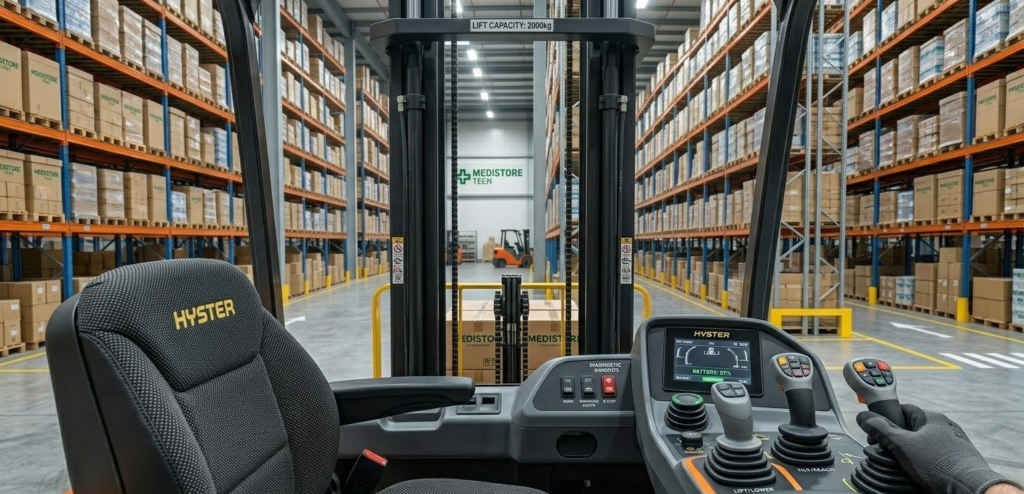
- A warehouse is only as fast as its healthiest operator. In an industry where drivers spend 8 to 12 hours sitting in a forklift cabin, ergonomics is not a luxury—it’s a performance requirement. Poorly designed equipment leads to back pain, neck strain, and overall fatigue, which directly results in slower work speeds and a higher likelihood of accidents due to lack of focus.
- Modern forklift design focuses on the “Human-Machine Interface.” This includes adjustable steering columns, suspension seats that absorb floor vibrations, and intuitive controls that require minimal wrist movement. When an operator is comfortable, their reaction times are faster, and their ability to maneuver in tight spaces improves. Investing in ergonomically superior forklifts is a direct investment in the long-term efficiency of your human workforce.
“Productivity starts with the person; comfort is the foundation upon which high-performance logistics is built.”
Why Ergonomics is the Secret to Higher Warehouse Productivity
- Lighting and visibility are also crucial ergonomic factors. Straining to see a pallet at a height of 30 feet can lead to severe neck injuries over time. Forklifts equipped with panoramic roofs, high-definition cameras, and laser-guided fork systems take the physical strain out of high-level picking. These features allow the operator to maintain a natural posture while performing complex tasks, reducing the risk of chronic health issues.
- inally, a focus on ergonomics improves employee retention. In a competitive labor market, workers are more likely to stay with a company that provides comfortable, high-tech equipment. Reducing physical fatigue means workers go home feeling better and return to work with more energy. A happy, healthy operator is the most valuable asset in any logistics chain, and ergonomic design is the key to keeping them that way.