
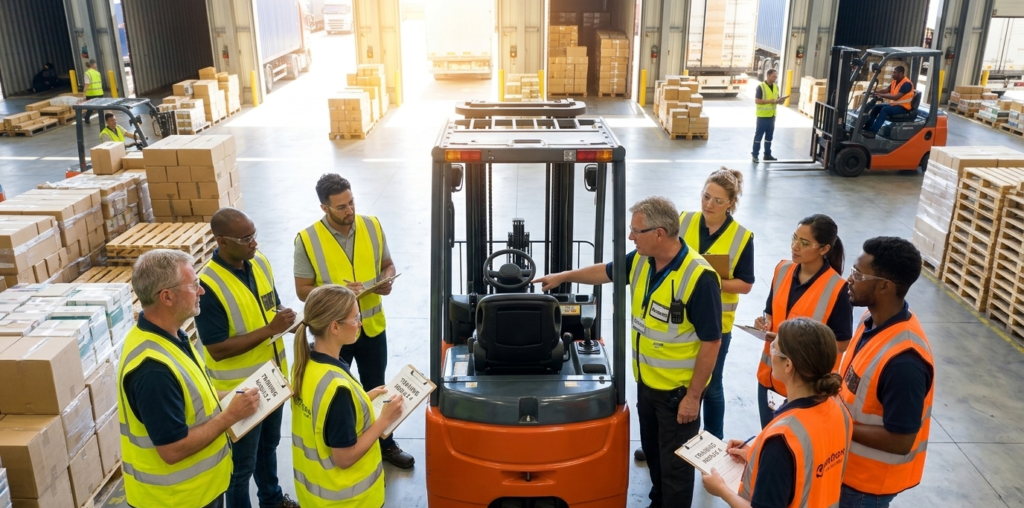
- Many warehouse owners view forklift training as a “check-the-box” legal requirement. However, professional training is actually one of the best investments you can make for your bottom line. A highly skilled, licensed operator is faster, safer, and much more careful with equipment. The difference between a “trained” driver and a “skilled” driver can be seen directly in your maintenance bills and insurance premiums.
- Skilled operators understand the “Stability Triangle” and the physics of load management. They know how to approach a high rack without damaging the racking uprights and how to turn a corner without tipping. This technical expertise reduces “nuisance damage”—the small dents, scratches, and broken pallets that cost thousands of dollars over time. A professional driver treats the forklift like a precision tool, not a bumper car.
“A license proves you can drive; professional training proves you can deliver profit safely.”
The ROI of Operator Training: Beyond Simple Compliance
- Furthermore, advanced training programs focus on energy efficiency. A driver who knows how to use regenerative braking and avoid unnecessary idling can extend battery life by 15-20%. In a large fleet, this results in significant energy savings. Training also covers daily pre-shift inspections. When a driver knows exactly what to look for, they can spot a hydraulic leak or a worn tire before it leads to a catastrophic failure or an accident.
- Lastly, investing in your team’s skills increases morale and reduces turnover. Operators feel valued when their company invests in their professional development. High-quality training creates a sense of pride in the work, leading to a more disciplined and organized warehouse culture. At the end of the day, your forklifts are only as good as the hands on the controls; make sure those hands are professionally trained.