
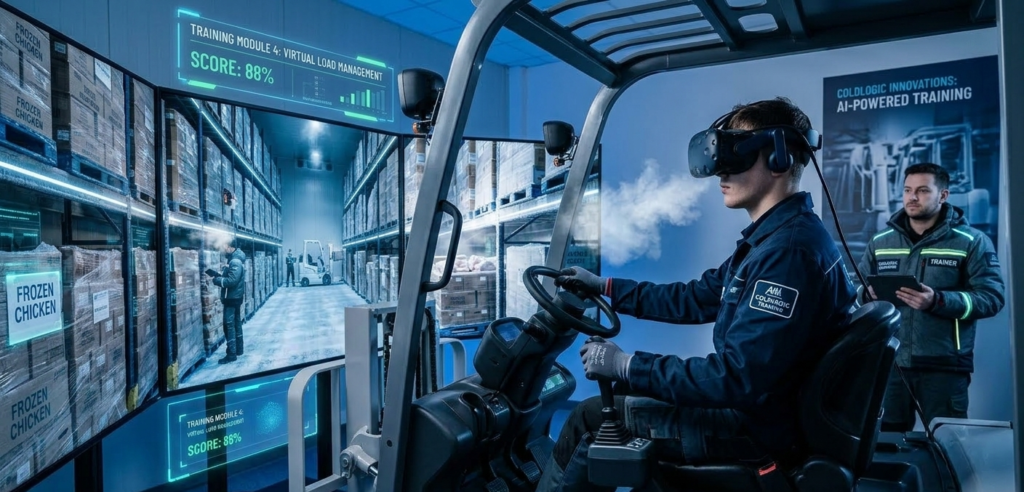
- Forklift training is entering the 21st century. Instead of just reading manuals and driving around cones, new operators are using Augmented Reality (AR) and Virtual Reality (VR) to learn the ropes. This high-tech approach to education is making training safer, faster, and much more engaging for the younger, “digital-native” generation of warehouse workers.
- VR simulators allow a student to sit in a virtual cabin and practice complex maneuvers without any risk of damaging real property or hurting anyone. If they crash into a virtual rack, they can simply hit “reset” and try again. This builds muscle memory and confidence before the student ever touches a real machine, significantly reducing the learning curve and the anxiety associated with operating heavy machinery for the first time.
“Simulation is the ultimate teacher; it allows us to master the machine without the cost of the mistake.”
The Digital Classroom: Using AR and VR to Train Forklift Drivers
- AR (Augmented Reality) takes it a step further by overlaying digital information onto the real world. A trainee wearing AR glasses can see “invisible” safety lines, the exact “stability triangle” of the forklift as they turn, and digital highlights on the pallets they need to pick. This real-time guidance helps new drivers understand the physics of the machine in a way that a textbook never could.
- These digital tools also allow for advanced data tracking. Trainers can see exactly where a student is struggling—perhaps they always turn too wide or lift too fast—and provide targeted coaching. By gamifying the training process, companies are seeing higher engagement levels and better retention of safety protocols. The next generation of forklift operators will be trained in a digital world, making them safer and smarter in the physical one.