
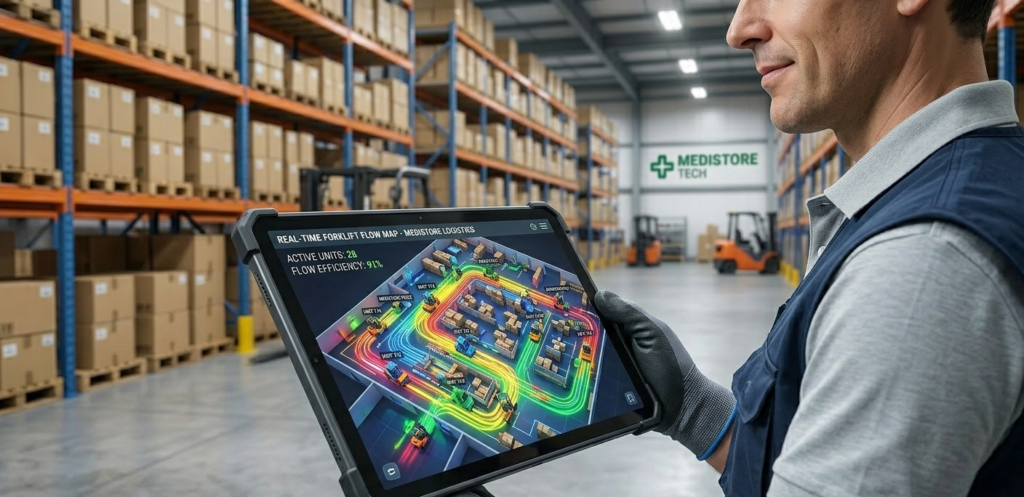
- Telematics has moved from being a luxury feature to a core necessity in modern logistics. By integrating GPS, sensors, and cellular data, warehouse managers can now “see” exactly how their forklifts are performing in real-time. This digital visibility allows for a more granular approach to management, shifting focus from reactive repairs to proactive optimization of every single move made on the warehouse floor.
- One of the primary benefits of telematics is operator accountability. The system can track impacts, sudden braking, and speed violations. By identifying “hot zones” where accidents frequently occur or spotting drivers who need additional training, companies can drastically reduce equipment damage and insurance premiums. This data doesn’t just monitor behavior; it creates a feedback loop that encourages safer and more professional driving habits across the team.
“Data is the new fuel for logistics; telematics is the engine that converts that data into profitable speed.”
How Telematics is Transforming Forklift Fleet Efficiency
- Beyond safety, telematics provides invaluable insights into fleet utilization. Many warehouses realize through data analysis that they are maintaining more forklifts than they actually need. By tracking “dead time” (when a forklift is on but not moving or lifting), managers can downsize their fleet or reassign vehicles to busier zones. This optimization leads to direct savings in lease costs, energy consumption, and maintenance schedules.
- Maintenance becomes a science rather than a guessing game with telematics. The system automatically logs hours of operation and sends alerts when a service is due. More importantly, it can detect engine fault codes before they result in a total breakdown. This “predictive maintenance” ensures that your fleet is always available during peak seasons, preventing the costly bottlenecks that occur when a primary forklift goes offline unexpectedly.