
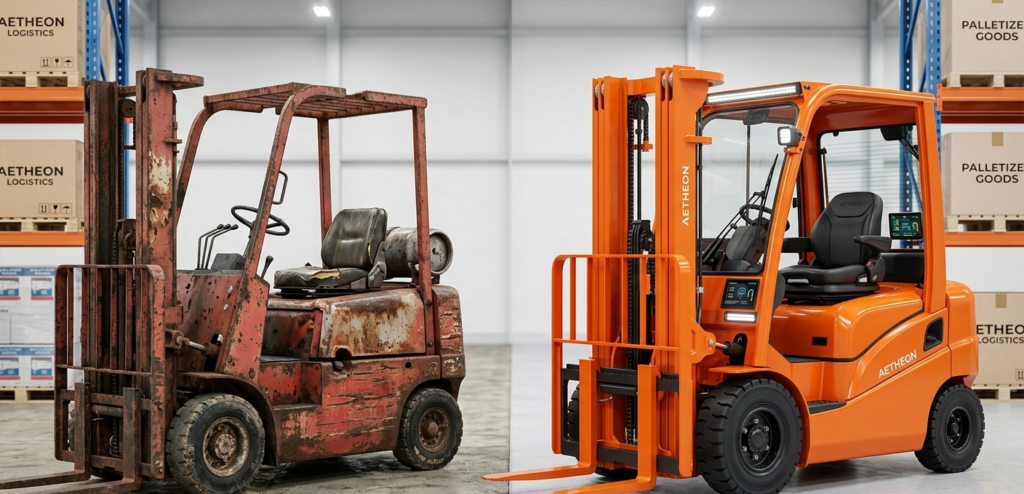
- It’s tempting to keep an old forklift running as long as possible to avoid the capital expense of a new one. However, there is a “tipping point” where an old vehicle starts costing you more than a new lease. Understanding the total cost of ownership (TCO) is essential for knowing when to say goodbye to an aging unit and hello to modern efficiency.
- The most obvious cost is maintenance. As forklifts age, parts become harder to find and more expensive. An old unit that breaks down once a month doesn’t just cost you the repair bill; it costs you the lost labor of the driver and the delay in fulfilling orders. If your “repair-to-value” ratio exceeds 30% of the vehicle’s worth in a single year, it is time to consider a replacement.
“An old forklift is a liability masquerading as a paid-off asset.”
Knowing When to Retire Your Forklift: The Cost of Aging Fleets
- Energy efficiency is another hidden drain. Older electric forklifts use primitive motor controllers that waste a lot of power as heat. Modern AC motors and Lithium-Ion systems are drastically more efficient, often paying for themselves through lower electricity bills within a few years. Additionally, old internal combustion forklifts produce more emissions, requiring more expensive warehouse ventilation systems to keep the air safe for workers.
- Finally, consider the technological gap. A 10-year-old forklift lacks the safety features, telematics, and ergonomic comforts of a new model. Modern equipment makes workers faster and more accurate. By holding onto “the old reliable,” you might be unknowingly handicapping your team’s productivity. Upgrading your fleet isn’t an expense; it’s a strategic move to keep your logistics operation competitive in a fast-moving market.