
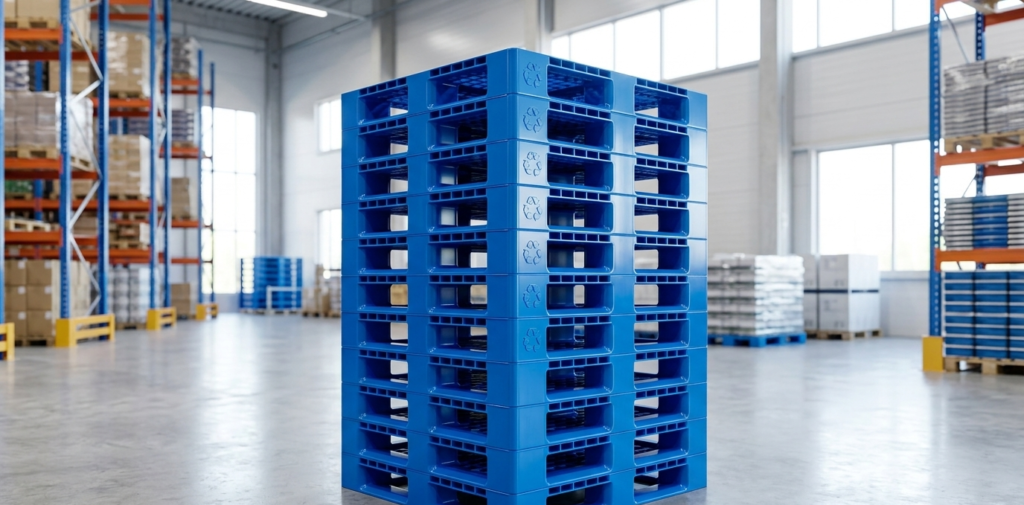
- The humble pallet is the DNA of global trade. Billions of them are in circulation every day. However, they also represent a massive amount of wood and plastic waste. The move toward a “Circular Economy” is changing how pallets are used, repaired, and recycled, helping logistics companies reduce their environmental impact while saving money on material costs.
- Pallet “Pooling” is a growing trend. Instead of buying and throwing away pallets, companies rent them from a pool. These high-quality pallets are tracked via IoT and RFID, collected when empty, repaired at a central facility, and sent back into the loop. This ensures that every pallet is used to its maximum potential, reducing the need to cut down millions of trees for single-use wood pallets.
“Sustainability isn’t about doing less; it’s about doing more with what we already have.”
Green Pallets: Sustainable Solutions for Modern Logistics
- For internal warehouse use, plastic pallets are becoming the preferred choice. While more expensive initially, they are 100% recyclable, easier to clean (essential for pharma and food), and they don’t have splinters or nails that can damage goods or injure workers. When a plastic pallet finally breaks after years of use, it can be ground up and molded into a brand-new pallet, creating a zero-waste cycle.
- Sustainability in the warehouse also includes what goes *on* the pallet. The shift toward biodegradable stretch film and reusable pallet wraps is reducing the mountain of plastic wrap that ends up in landfills. By viewing the pallet as a reusable asset rather than a disposable item, logistics firms can significantly lower their carbon footprint and appeal to the growing market of eco-conscious consumers.