
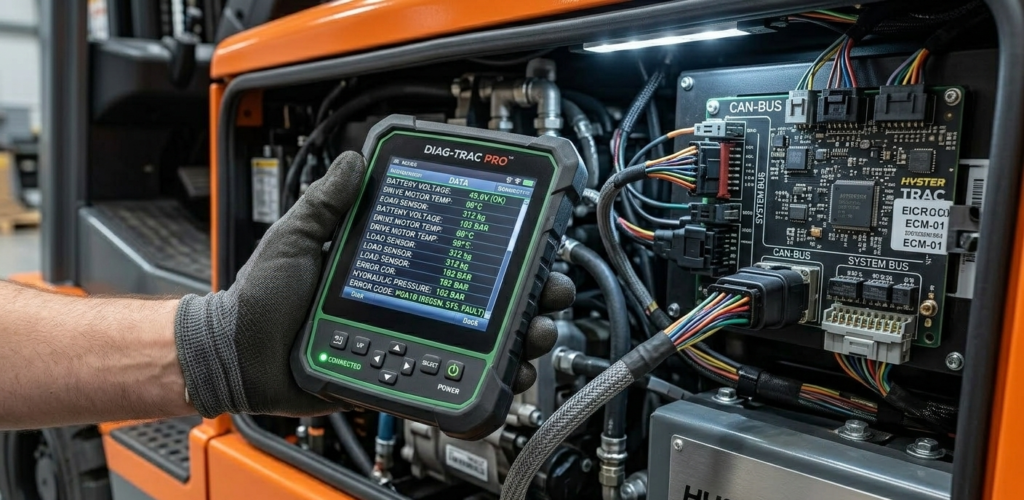
- For decades, forklift maintenance followed a simple rule: if it breaks, fix it. While this reactive approach worked in slower times, today’s 24/7 logistics environment cannot afford unplanned downtime. Predictive maintenance uses sensors and AI to identify potential failures before they happen. This shift in strategy is saving companies thousands of dollars in lost productivity and emergency repair costs.
- The core of predictive maintenance is “Condition Monitoring.” Sensors attached to the engine, hydraulic systems, and battery packs monitor vibrations, temperatures, and fluid levels. By establishing a “baseline” for a healthy machine, the software can detect tiny deviations that indicate a part is starting to wear out. This allows technicians to replace a $50 bearing during a scheduled break rather than dealing with a $5,000 engine failure in the middle of a shift.
“Predictive maintenance turns the uncertainty of mechanical failure into the certainty of operational uptime.”
Moving from Reactive to Predictive Maintenance in Material Handling
- This technology also revolutionizes spare parts management. Instead of keeping a massive inventory of parts “just in case,” warehouses can order exactly what they need based on the data. This “Just-In-Time” approach to maintenance frees up capital and reduces the physical space needed for storage. It also ensures that the technicians have the right tools and parts ready the moment a forklift enters the service bay.
- Beyond cost savings, predictive maintenance significantly enhances workplace safety. A forklift with a failing hydraulic hose or a worn-out braking system is a ticking time bomb. By ensuring that every vehicle is in peak mechanical condition through data-driven insights, managers can rest easy knowing they are providing their operators with the safest possible tools to do their jobs effectively.