
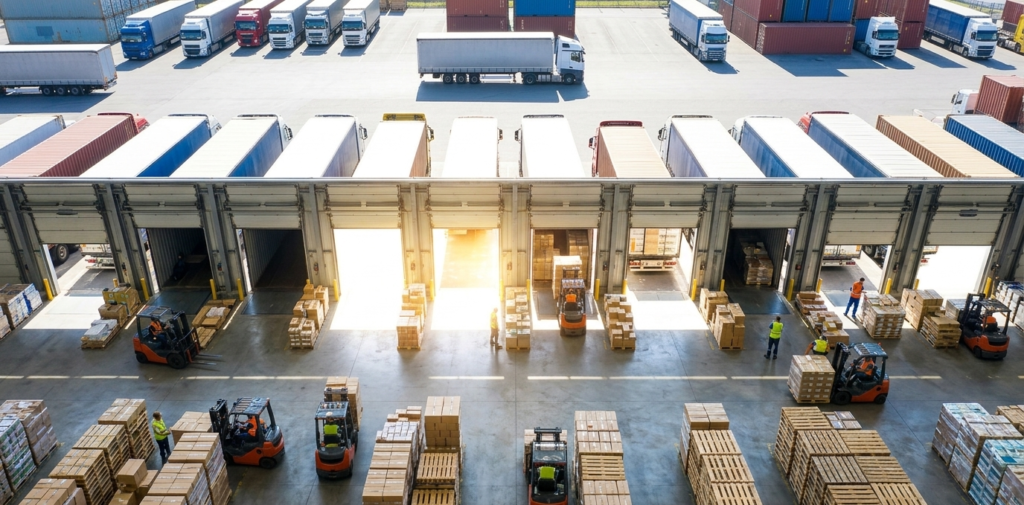
- The loading dock is the heartbeat of the warehouse. It is where everything enters and everything leaves. Yet, it is often the most congested and dangerous area of the facility. If your dock is slow, your entire operation is slow. Optimizing this zone requires a combination of smart floor planning, specialized equipment, and disciplined traffic management to ensure a smooth flow of goods.
- The first step to dock optimization is choosing the right forklifts. High-speed counterbalance trucks with excellent maneuverability are essential for the quick turnarounds required at the dock. Features like side-shifters and fork-positioners allow drivers to align with pallets inside a truck trailer without having to get out and adjust manually. Every second saved in the trailer adds up to hours of gained productivity over a month.
“Efficiency at the dock is the difference between a warehouse that flows and a warehouse that stalls.”
The Dock Bottleneck: How to Speed Up Loading and Unloading
- Safety at the dock is paramount. The “Dock Gap”—the space between the trailer and the floor—is a major hazard. Using high-quality dock levelers and vehicle restraints is non-negotiable. Furthermore, implementing clear lighting systems (Red/Green lights) for truck drivers and using floor-projected safety lines for pedestrians ensures that everyone knows exactly where they should be, preventing the chaotic collisions that often occur in busy dock zones.
- Data-driven scheduling can also eliminate dock congestion. By using software to synchronize truck arrivals with available forklift teams, warehouses can prevent “clumping” where five trucks arrive at once. A steady, predictable flow of vehicles allows the dock team to work at a sustainable pace, reducing stress and errors. An optimized dock is a quiet, organized, and highly efficient gateway to the rest of your business.