New advancements in lithium battery technology are helping warehouses achieve higher productivity, improved safety, and lower operational costs.
The Evolution of Lithium Battery Technology
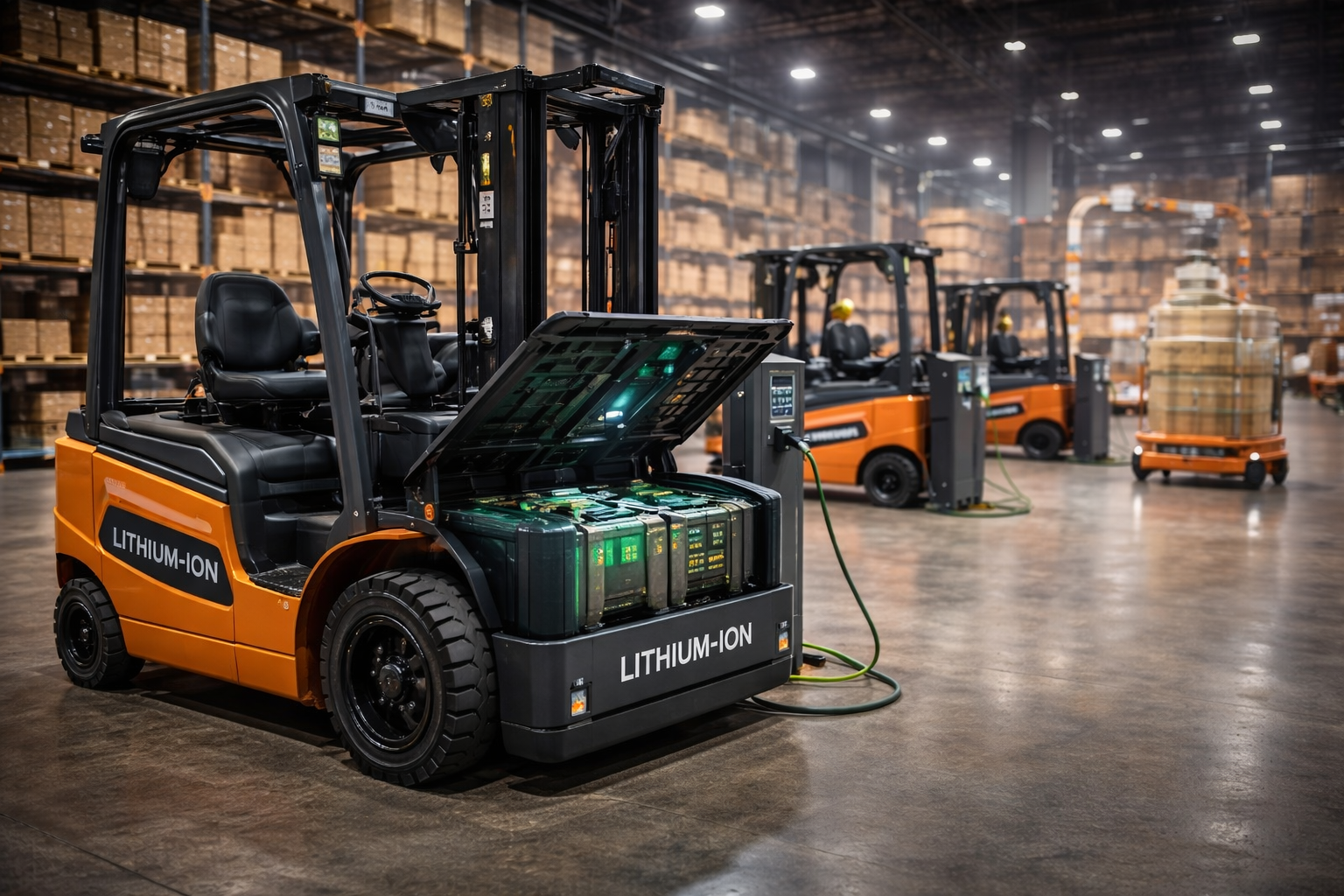
Technological advancements in lithium battery systems are transforming how warehouses power their material-handling equipment. Modern lithium-ion batteries are now designed with enhanced safety, higher energy density, and intelligent monitoring systems that help optimize forklift performance.
Electric Forklift Market Expected to Reach $80 Billion by 2026
According to industry forecasts, the electric forklift market is projected to expand from $72 billion in 2025 to more than $80 billion in 2026, highlighting the rapid adoption of electric and lithium-powered equipment in warehouses worldwide.
Recent innovations focus on faster charging capabilities, longer lifecycle performance, and real-time battery monitoring, allowing warehouse managers to track equipment health and predict maintenance needs.
LiFePO4 Batteries: A Safer Power Solution for Forklifts
Another major development is the adoption of lithium iron phosphate (LiFePO4) battery chemistry, which provides improved thermal stability and enhanced safety compared to earlier battery technologies. These batteries are more resistant to overheating and can support thousands of charge cycles without significant performance loss.
Lithium Battery Technology Powering the Future of Logistics
For warehouse operators, these improvements translate into fewer operational interruptions, lower maintenance requirements, and increased equipment availability. As warehouses continue to adopt automation and robotics, advanced lithium battery technology will remain a key driver of efficiency and innovation in the logistics sector.