
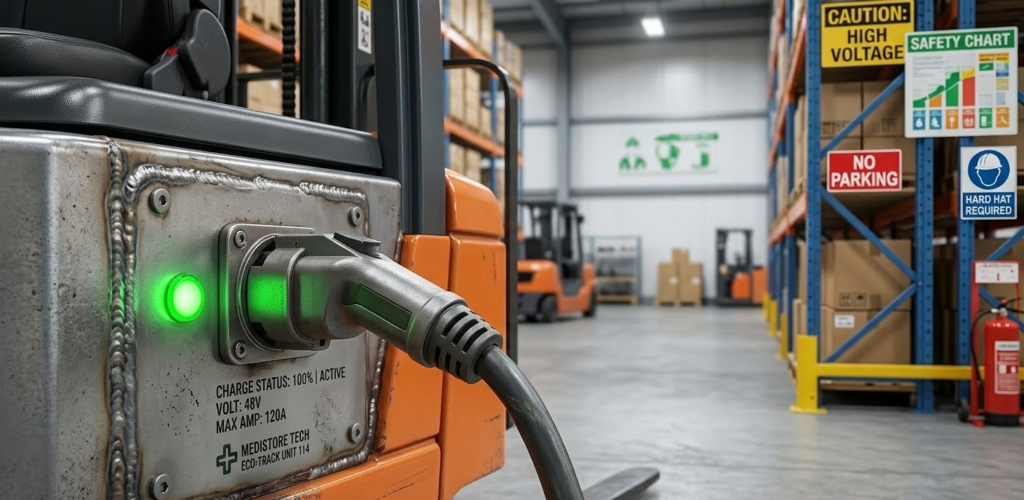
- As the global warehousing industry moves away from traditional fuels, Lithium-Ion technology has emerged as the frontrunner. However, with great power comes the need for rigorous safety protocols. Unlike lead-acid batteries, Lithium-Ion units are high-energy density systems that require specific handling to prevent thermal incidents. Understanding the chemistry and the integrated safety features of these batteries is the first step toward a hazard-free workplace.
- A critical component of Lithium-Ion safety is the Battery Management System (BMS). This “digital brain” monitors every cell’s voltage and temperature in real-time. If the system detects an anomaly—such as overcharging or excessive heat—it automatically shuts down to prevent damage. Warehouse managers must ensure that operators are trained to respect these system alerts and never attempt to bypass the automated safety controls.
“Safety isn’t just a manual; it’s a culture that transforms a high-tech warehouse into a high-performance engine.”
Ensuring Maximum Safety in Lithium-Ion Forklift Operations
- Charging infrastructure also plays a vital role. While Lithium-Ion batteries support “opportunity charging,” the charging stations must be placed in well-ventilated, designated areas. Cables should be inspected daily for wear and tear, and the floor area must remain dry and clear of flammable materials. Implementing a “plug-in” culture where drivers charge during short breaks helps maintain battery health while keeping the operational flow steady and safe.
- Finally, emergency preparedness is non-negotiable. Even though Lithium-Ion batteries are extremely stable, staff must be equipped with the correct Class D fire extinguishers and know the specific evacuation routes for battery-related incidents. Regular safety drills and updated signage around charging zones significantly reduce the risk of human error during high-pressure situations, ensuring that your fleet remains an asset rather than a liability.