
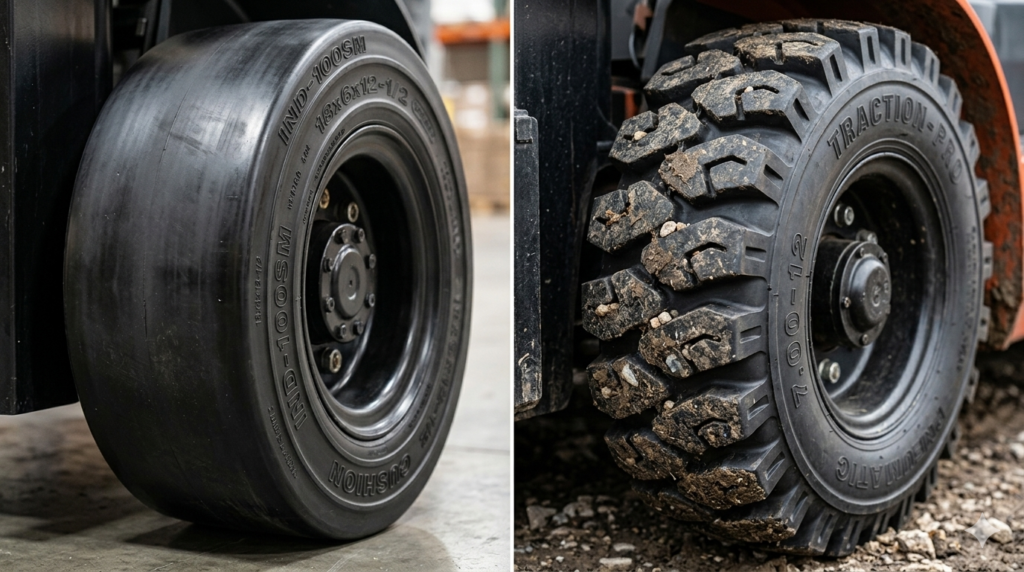
- Most people don’t think about forklift tires until they go flat or lose traction. However, the tires are the only contact point between your multi-ton machine and the ground. Choosing the wrong tire can lead to poor fuel efficiency, excessive floor wear, and even safety hazards. Understanding the difference between Solid (Cushion) and Pneumatic tires is fundamental for fleet performance.
- Most people don’t think about forklift tires until they go flat or lose traction. However, the tires are the only contact point between your multi-ton machine and the ground. Choosing the wrong tire can lead to poor fuel efficiency, excessive floor wear, and even safety hazards. Understanding the difference between Solid (Cushion) and Pneumatic tires is fundamental for fleet performance.
“The right tires turn a powerful machine into a precise instrument.”
Tires Matter: Selecting the Right Grip for Your Ground
- Pneumatic tires are air-filled and look like tractor tires. They are designed for rugged, outdoor use on gravel, dirt, or uneven asphalt. They provide a “cushion of air” that protects the forklift’s components and the operator’s back. For those who want the best of both worlds, “Solid Pneumatic” tires are available—they look like air tires but are filled with solid rubber, making them puncture-proof while still offering some outdoor versatility.
- Maintenance of tires is a critical safety check. A “flat spot” on a tire can cause the forklift to wobble, potentially tipping a high load. Chunking—where pieces of rubber fall off—indicates that the tire is being used on the wrong surface. By regularly inspecting and choosing the correct tire compound (like non-marking tires for clean food warehouses), you ensure a stable ride and a longer life for your equipment.