
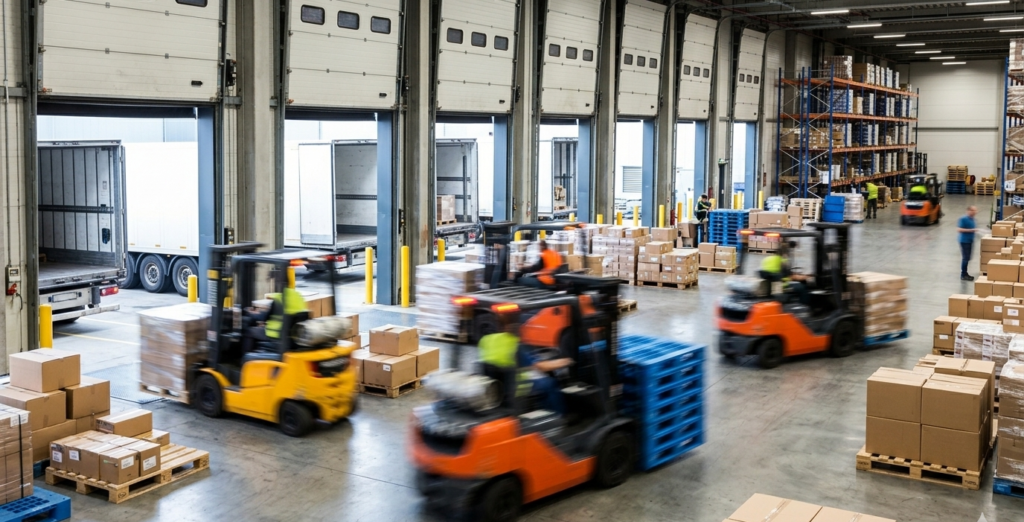
- In a traditional warehouse, goods are received, put away, stored for weeks, picked, and then shipped. Cross-docking eliminates the storage phase. Goods move directly from the inbound truck to the outbound truck with little to no time spent on a shelf. This “just-in-time” logistics strategy is the key to the success of giants like Walmart and Amazon, allowing for incredible speed and reduced labor costs.
- Cross-docking requires a highly specialized floor layout. The facility is usually long and narrow, with docks on both sides. Inbound trucks unload on one side, and forklifts immediately zip across the floor to load the goods onto outbound trucks on the other side. This requires a fleet of fast, highly maneuverable forklifts and a team of operators who can work with high precision under tight deadlines.
“Storage is an expense; movement is a profit. Cross-docking is the art of perpetual movement.”
The Speed of Cross-Docking: Shipping Faster Without Storing
- Technology is the “glue” that holds cross-docking together. Warehouse Management Systems (WMS) must be perfectly synchronized with truck schedules. If a truck is five minutes late, the whole cross-docking chain can stall. Using real-time data and automated sorting systems ensures that every box goes to the right truck without the need for manual paperwork, making the process nearly instantaneous.
- While cross-docking reduces storage costs and speeds up delivery, it requires a higher level of organization. There is no room for error when goods aren’t being stored. However, for fast-moving consumer goods, perishables, and high-demand electronics, cross-docking is the ultimate fulfillment strategy. It turns your warehouse from a “storage box” into a “high-speed transit hub.”