
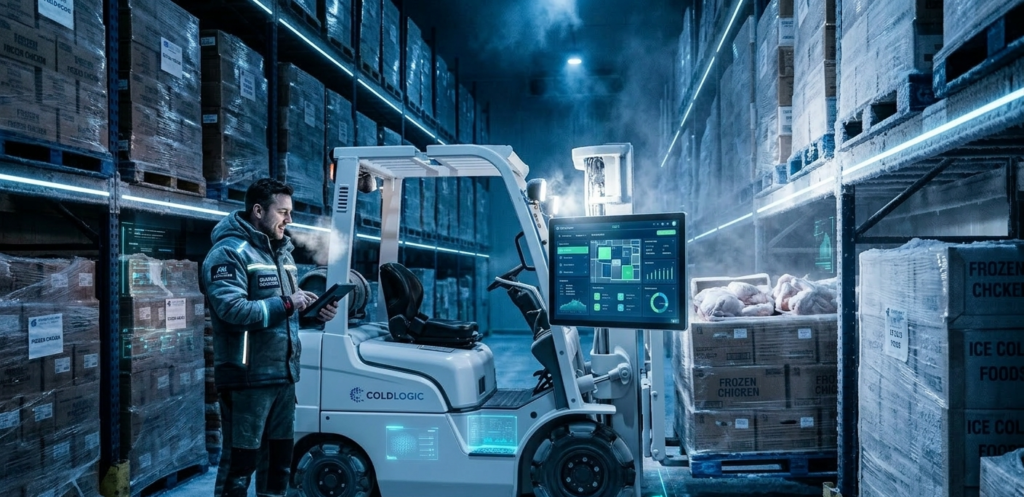
- The rise of Automated Guided Vehicles (AGVs) and Autonomous Mobile Robots (AMRs) has sparked a debate: will robots replace human forklift drivers? The reality is more complex. While automation is taking over repetitive, long-distance transport tasks, the need for human skill in complex maneuvering and decision-making remains higher than ever. The future of warehousing is not “Human OR Robot,” but “Human AND Robot.”
- Automation is best used for “Point A to Point B” movement. Robots can work 24/7 without breaks, moving heavy pallets across miles of warehouse floor with perfect precision. This frees up human operators to handle more high-value tasks, such as specialized picking, quality control, and managing the automated systems themselves. By offloading the boring, repetitive tasks to machines, the human workforce becomes more productive and less prone to burnout.
“Automation doesn’t delete the human element; it upgrades the human role from laborer to strategist.”
The Future of Automation: Humans and Robots in the Warehouse
- One of the biggest advantages of automated forklifts is safety. A robot never gets tired, distracted, or angry. Equipped with 360-degree sensors, an automated forklift will stop instantly if it detects a person or an obstacle. This “Zero-Accident” potential is a huge draw for high-volume distribution centers where human error can lead to costly damages and injuries. Automation brings a level of predictability that manual operations simply cannot match.
- However, the cost and complexity of full automation mean it isn’t for everyone. Small to medium warehouses still rely on the flexibility of human drivers who can adapt to changing floor plans and unexpected cargo types instantly. As technology advances, we are seeing more “Hybrid” solutions where manual forklifts are equipped with automated safety assists. The goal is to use technology to empower the human worker, making the warehouse safer and smarter for everyone.